Every backyard project comes down to a few key decisions. We break down the real pros, cons, and trade-offs for each — so you can choose with confidence before you spend a dollar.
🧱
Driveways & Decking
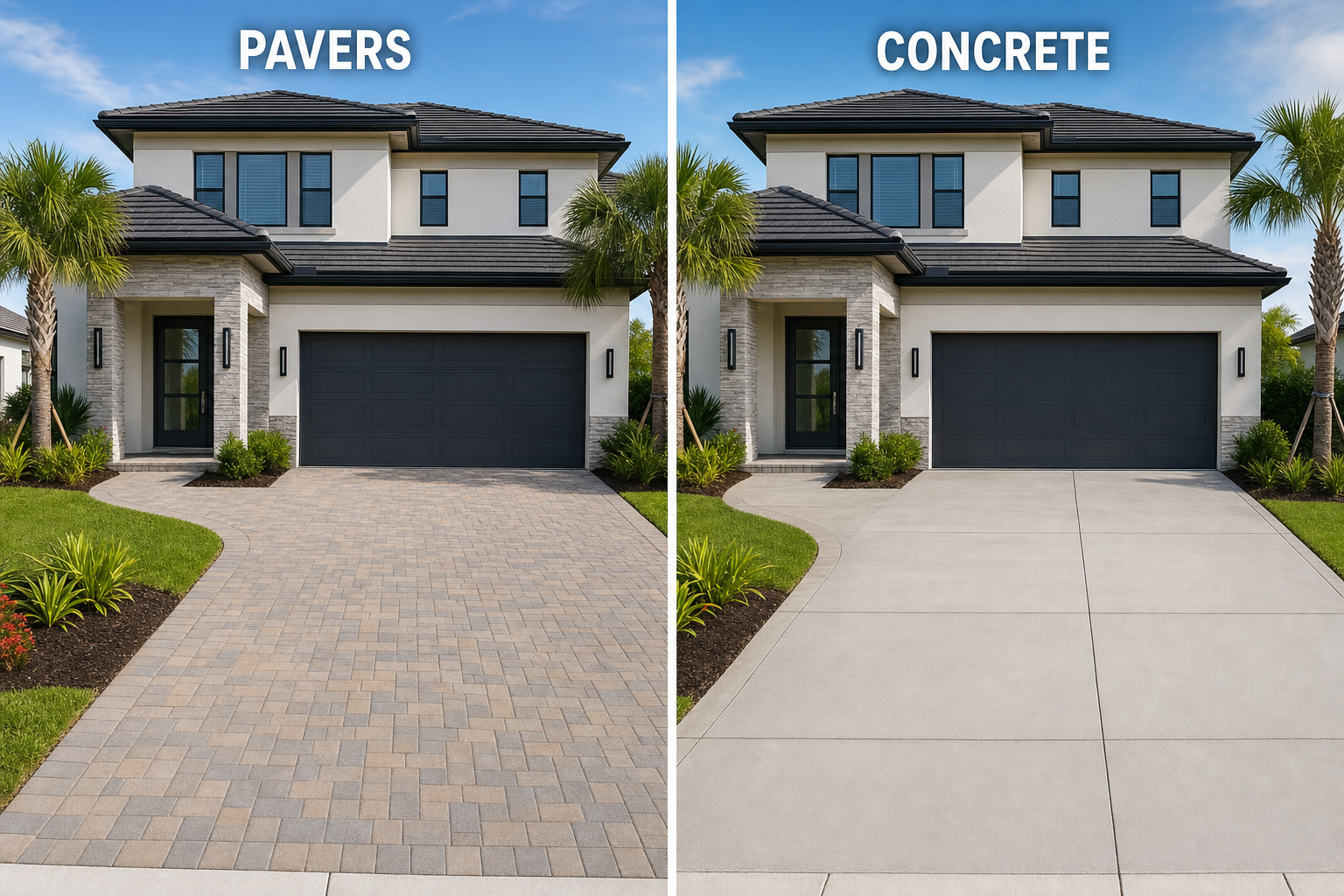
Pavers vs. Concrete
Both pavers and poured concrete are popular driveway and patio materials — but they perform very differently over time, and the right choice depends on your budget, climate, and how much you value repairability.
Pavers
Individual units can be lifted and replaced if cracked or stained
Wide variety of colors, patterns, and textures
Flexes slightly with ground movement — less prone to major cracking
Higher resale/curb appeal in most markets
Higher upfront material + labor cost
Joint sand may need occasional refreshing
Weeds can grow in joints if not properly sealed
Concrete
Lower upfront cost per square foot
Smooth, seamless surface — easy to clean
Can be stamped or stained for a custom look
Faster install for large flat areas
Cracks are permanent and highly visible
Full slab replacement often needed for repairs
Fewer texture/pattern options than pavers
Can become slippery when wet without proper finish
Our Take
If you want long-term repairability and a premium look, pavers are worth the extra investment. If budget is the top priority and you're covering a large, simple area, concrete is a solid choice.
🌱
Landscaping
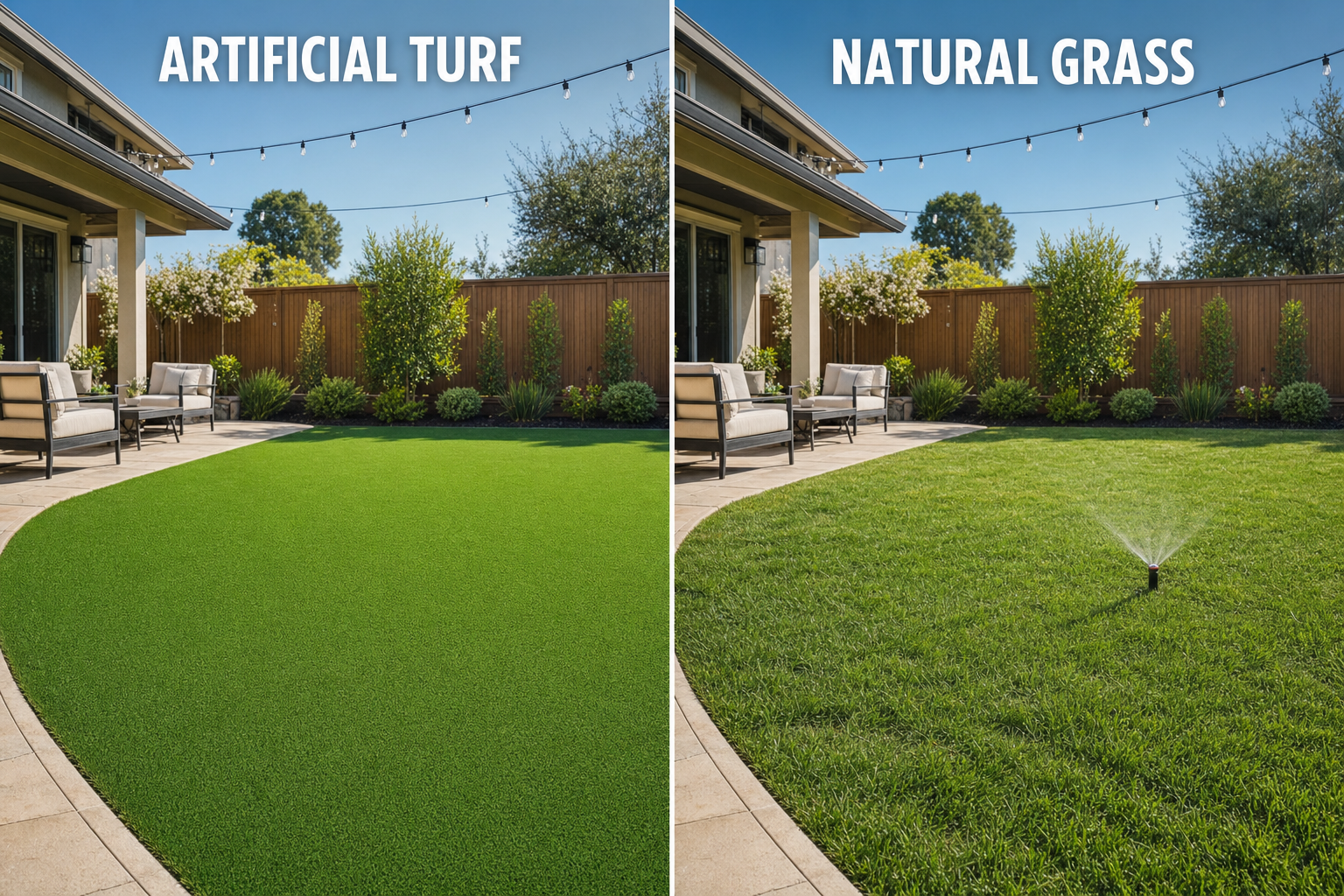
Artificial Turf vs. Natural Grass
Southern California's dry climate has made artificial turf increasingly popular — but natural grass still has real advantages for certain households, especially those with pets or young kids who play outdoors often.
Artificial Turf
No watering, mowing, or fertilizing — near-zero maintenance
Stays green year-round regardless of drought
Great for water-restricted areas and HOA compliance
No mud, no dead patches, consistent look
Higher upfront installation cost
Can get hot in direct summer sun
Needs periodic rinsing/deodorizing with pets
Not biodegradable — environmental tradeoff
Natural Grass
Lower upfront cost
Naturally cooler underfoot
Supports local ecosystem (pollinators, soil health)
Easy to patch or reseed in sections
Requires regular watering, mowing, and fertilizing
Can go brown/patchy in drought or high heat
Higher long-term water bill
More upkeep time and cost over the years
Our Take
For low-maintenance, water-wise yards — especially with pets or in drought-prone areas — turf usually wins long-term. If you love a natural feel and don't mind upkeep, grass is still a great option.
🏊
Pool Finishes
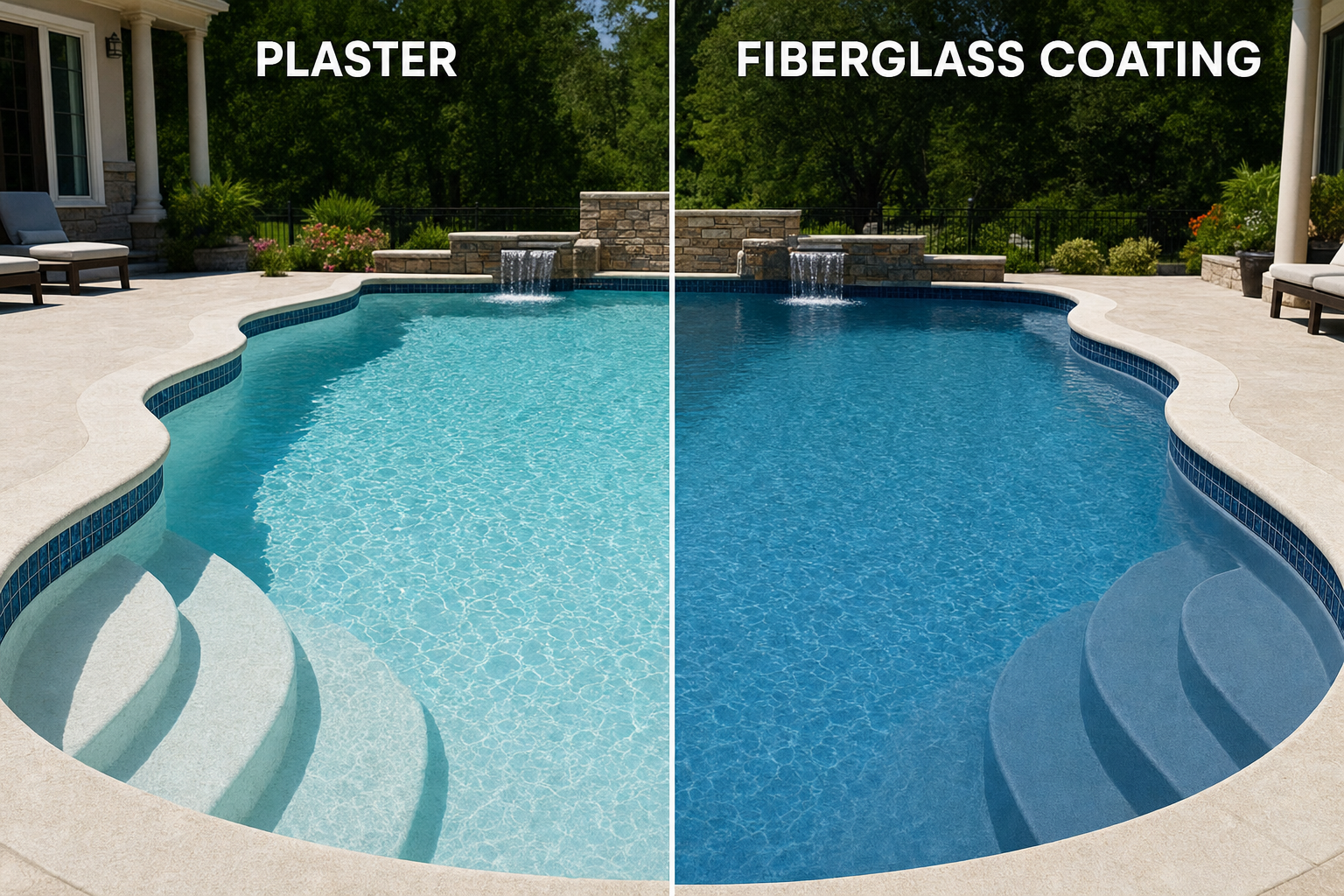
Pool Plaster vs. Fiberglass Coating
Traditional plaster has been the pool industry standard for decades, but modern fiberglass/thermoplastic coatings (like Aquabright™) are changing the game — especially for commercial pools that can't afford weeks of downtime.
Plaster
Lower upfront material cost
Familiar, classic pool look
Widely available contractors and repair options
6–8 week downtime for replastering, plus a 30-day cure
Porous surface — stains, etches, and roughens over time
For commercial properties (HOAs, hotels, apartments) where downtime costs real money, fiberglass coating is the clear winner. For budget-conscious residential pools with no urgency, plaster remains a reasonable option.
🏠
Patio Covers
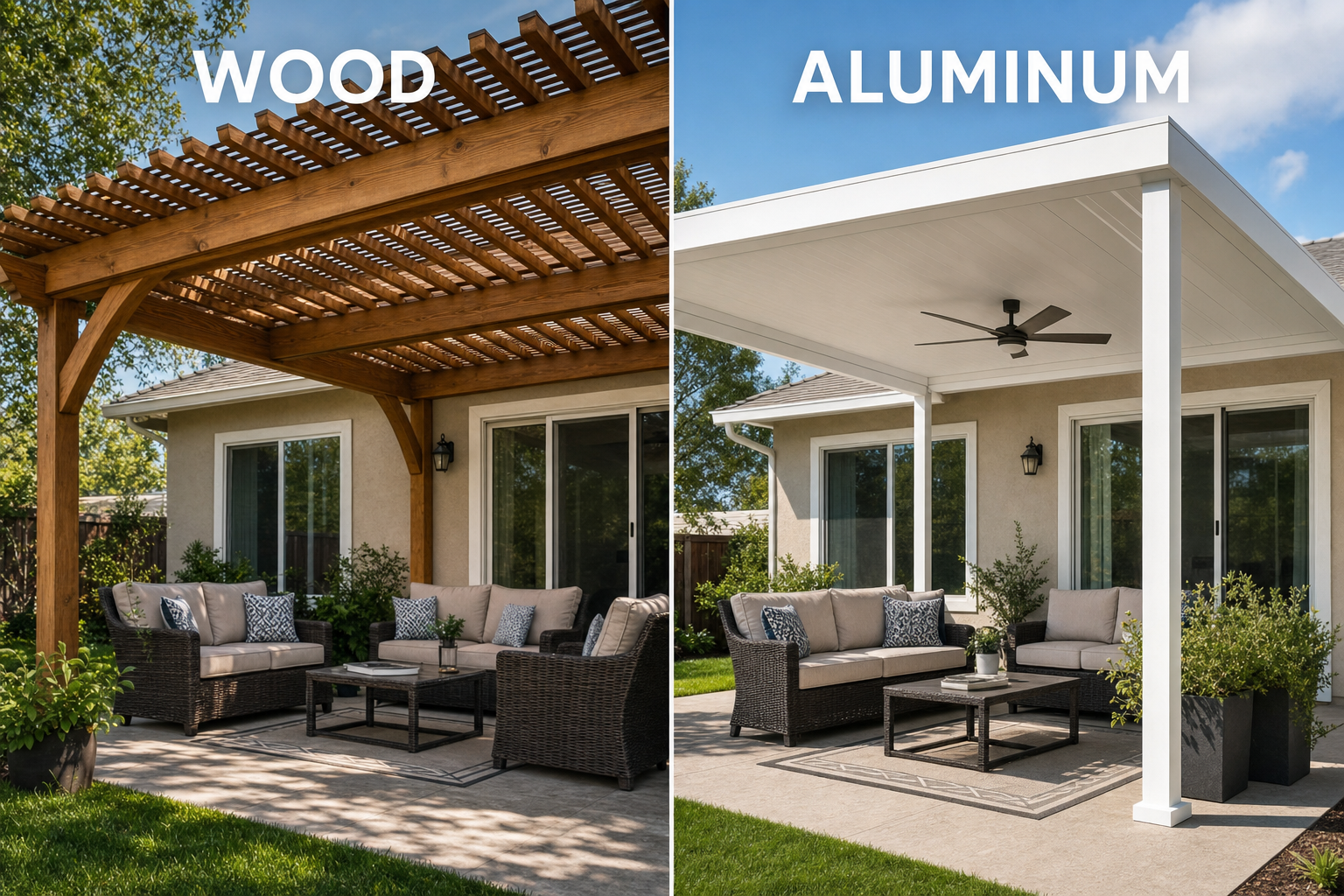
Patio Covers: Wood vs. Aluminum
Wood and aluminum are the two most common patio cover materials. Wood offers natural warmth; aluminum offers modern durability with far less maintenance.
Wood
Warm, natural aesthetic that suits traditional homes
Can be stained or painted to match any color
Often lower material cost for basic designs
Needs regular staining/sealing to prevent rot & sun damage
Vulnerable to termites and moisture over time
Shorter lifespan than aluminum in most climates
Aluminum
Virtually maintenance-free — no staining, no rot, no termites
Lasts decades with minimal upkeep
Can be insulated for better temperature control
Clean, modern look that pairs with any home style
Higher upfront material cost
Less "natural" aesthetic than wood
Limited to manufacturer color/finish options
Our Take
For long-term value and low maintenance, aluminum is the modern standard — especially in Southern California's sun and occasional rain. Wood is best for homeowners prioritizing a rustic look who don't mind upkeep.
🔥
Outdoor Kitchens
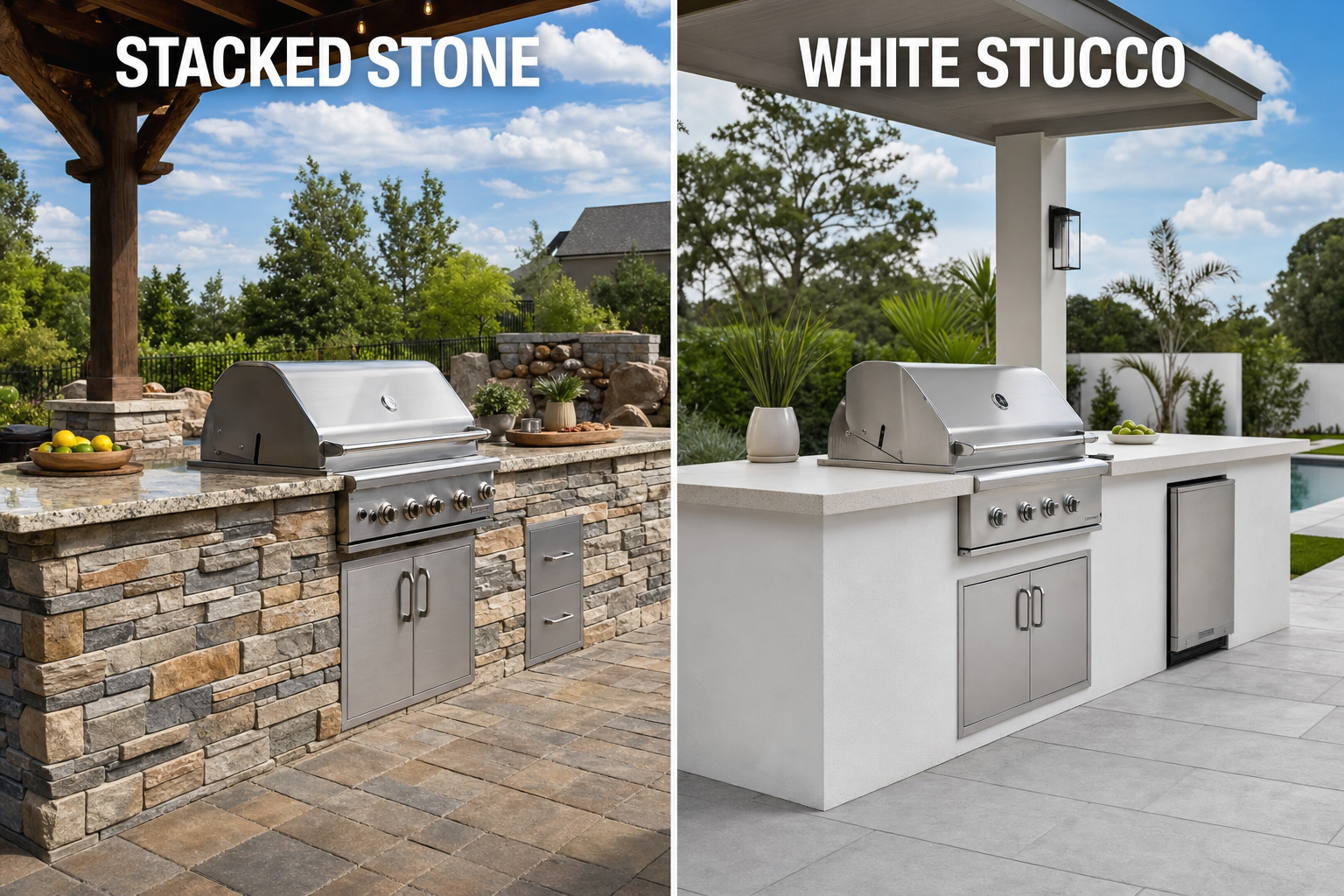
Outdoor Kitchen Styles: Stacked Stone vs. Stucco
Your BBQ island's exterior finish sets the tone for your whole backyard. Natural stone reads rustic and organic, while smooth stucco feels clean and modern.
Stacked Stone Veneer
Natural, textured look that ages beautifully
Pairs well with landscaping, pergolas, fire features
Very durable and weather-resistant
Higher material and labor cost
Heavier — requires solid structural framing
Limited color range (natural stone tones)
White Stucco
Clean, modern look that suits contemporary homes
Can be tinted or painted any color
Generally lower material cost than natural stone
Can show cracks/staining more visibly over time
Needs occasional recoating or touch-up paint
Less textured/dimensional than stone
Our Take
Choose stacked stone for a rustic, high-end natural look that lasts. Choose stucco for a modern, customizable finish at a friendlier price point.
🌴
Landscaping
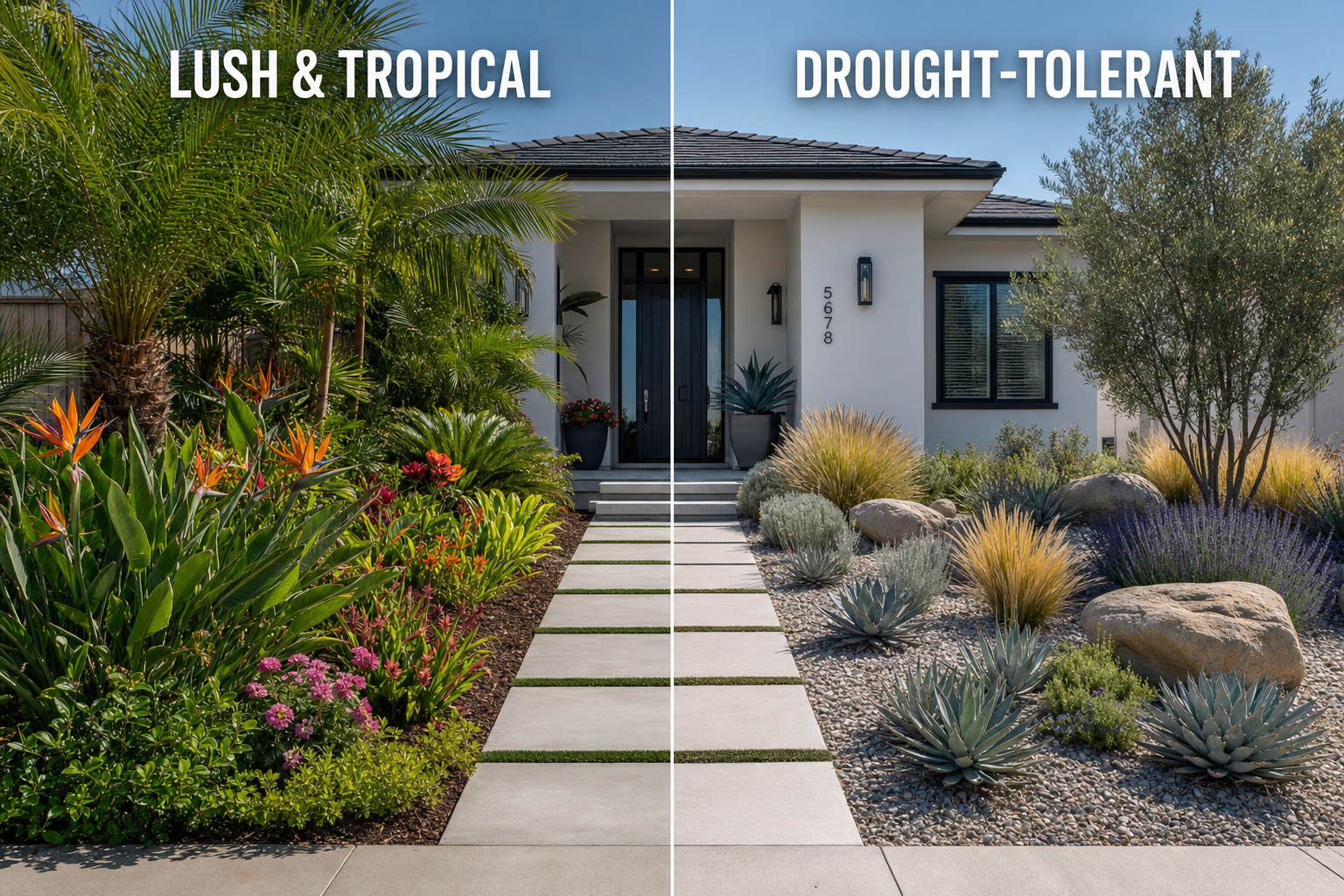
Landscape Design: Lush & Tropical vs. Drought-Tolerant
Your landscape design sets the entire mood of your outdoor space. Lush tropical planting creates a resort feel, while drought-tolerant xeriscaping is built for water conservation and low upkeep.
Lush & Tropical
Resort-style, vacation-like ambiance
Dense greenery provides privacy and shade
Wide variety of colors, textures, and blooms
Higher water usage — costly in drought regions
More frequent pruning, fertilizing, and pest control
Can attract more insects and require more upkeep
Drought-Tolerant Xeriscape
Dramatically lower water bills
Minimal pruning or fertilizing needed
Modern, clean aesthetic with gravel, succulents & boulders
Often qualifies for local water-conservation rebates
Less shade and privacy coverage than lush planting
Can feel stark without thoughtful design
Fewer bold color/bloom options
Our Take
If low water bills and low maintenance matter most, xeriscaping is the smart long-term choice. If you want a lush resort feel and don't mind the upkeep, tropical landscaping delivers unmatched ambiance.
🪨
Hardscape
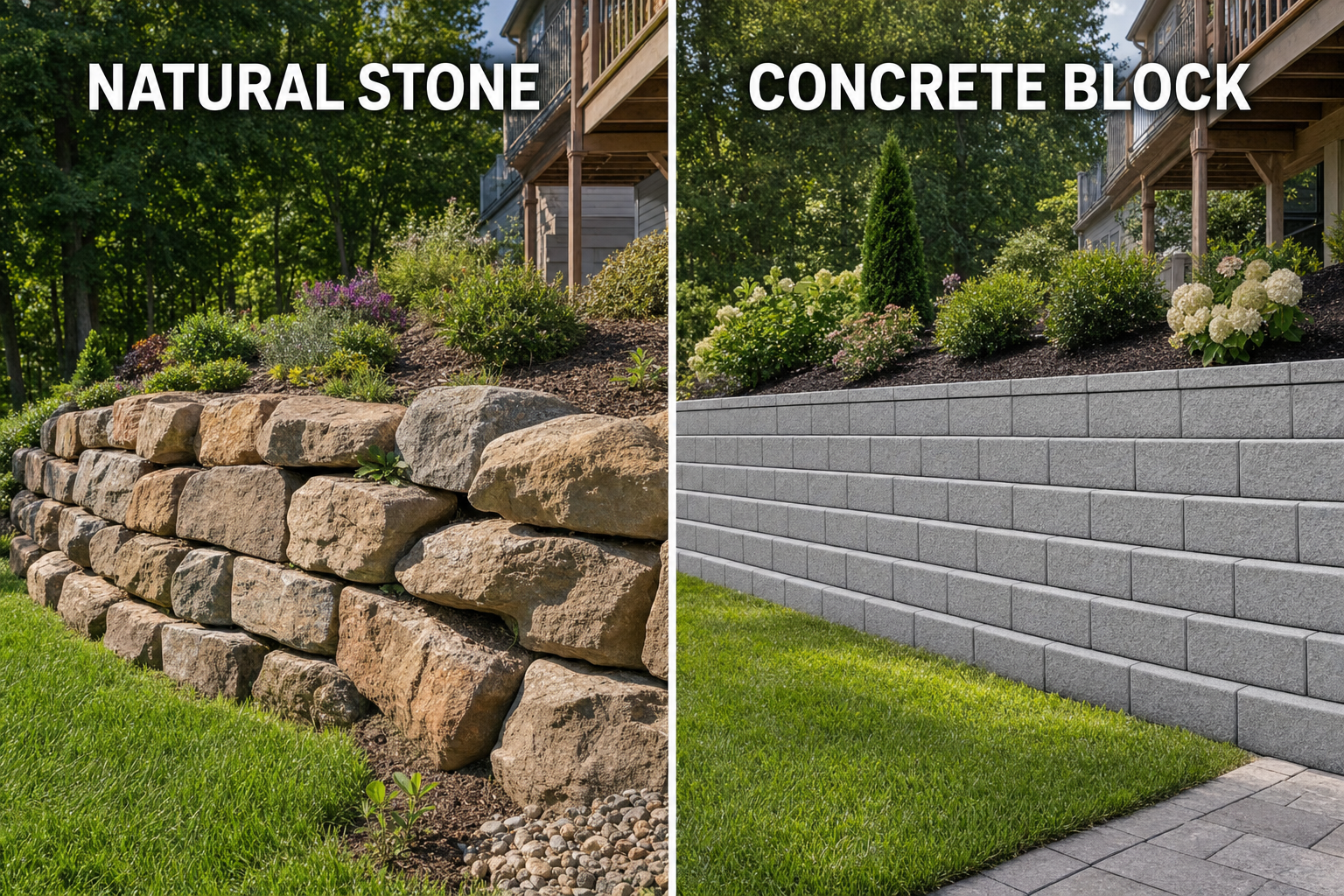
Retaining Walls: Natural Stone vs. Concrete Block
Retaining walls hold back slopes and create usable flat space in your yard — the material you choose affects both the cost and the overall look of your landscaping.
Natural Stone / Boulders
Rustic, organic look that blends into natural landscaping
Extremely durable — many stone walls last generations
No two walls look alike — truly custom character
Higher material and labor cost, especially with large boulders
Requires skilled masons for proper structural stacking
Heavier — may need additional engineering for tall walls
Segmental Concrete Block
Lower cost than natural stone
Interlocking systems are engineered for strength and drainage
Faster installation with consistent, uniform results
Wide range of colors and block styles available
Less organic/natural look than real stone
Can look institutional if not paired with landscaping
Some lower-end blocks fade or chip over time
Our Take
Choose natural stone for a premium, one-of-a-kind look where budget allows. Segmental concrete block is a smart, cost-effective choice for larger walls or budget-conscious projects.
🔥
Fire Features
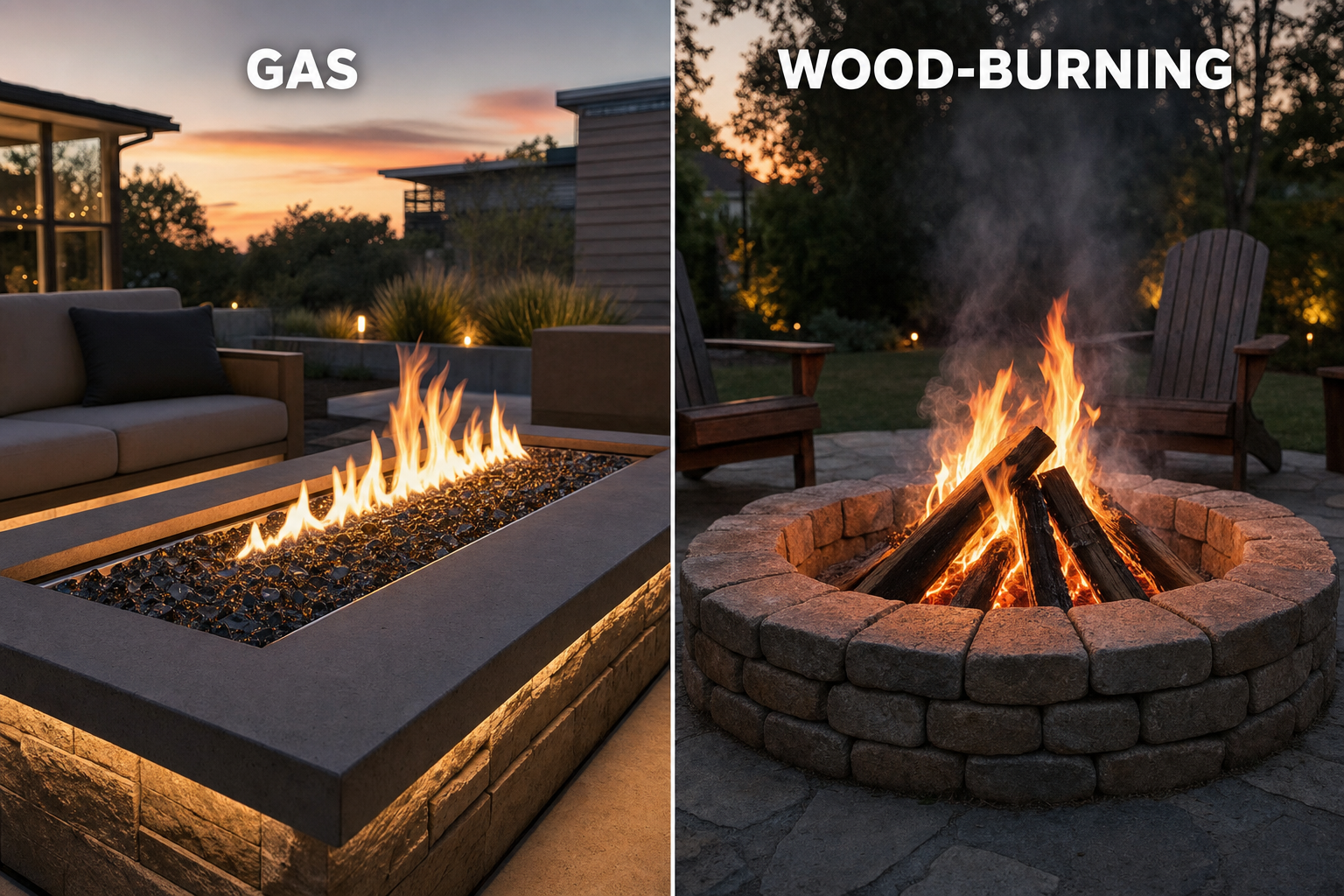
Fire Pits: Gas vs. Wood-Burning
A backyard fire feature is one of the best ways to extend outdoor living into the evening — but gas and wood-burning pits offer very different experiences.
Gas Fire Pit
Instant on/off with a switch or remote — no fire-starting hassle
No smoke, ash, or embers to clean up
Consistent, controllable flame height
Often allowed in areas with wood-burning restrictions
Requires a gas line hookup — added installation cost
Less authentic crackling-fire ambiance and campfire smell
Ongoing gas utility cost
Wood-Burning Fire Pit
Authentic crackling sound, smell, and larger flames
No gas line needed — simpler installation
Lower cost to build in many cases
Requires sourcing, storing, and cleaning up firewood/ash
Produces smoke — can be an issue with neighbors or air quality days
May be restricted or banned during fire season in some areas
Our Take
For pure convenience and clean city living, gas is hard to beat. For the classic backyard campfire experience — and where local regulations allow — wood-burning still has real charm.
🪵
Decks & Coatings
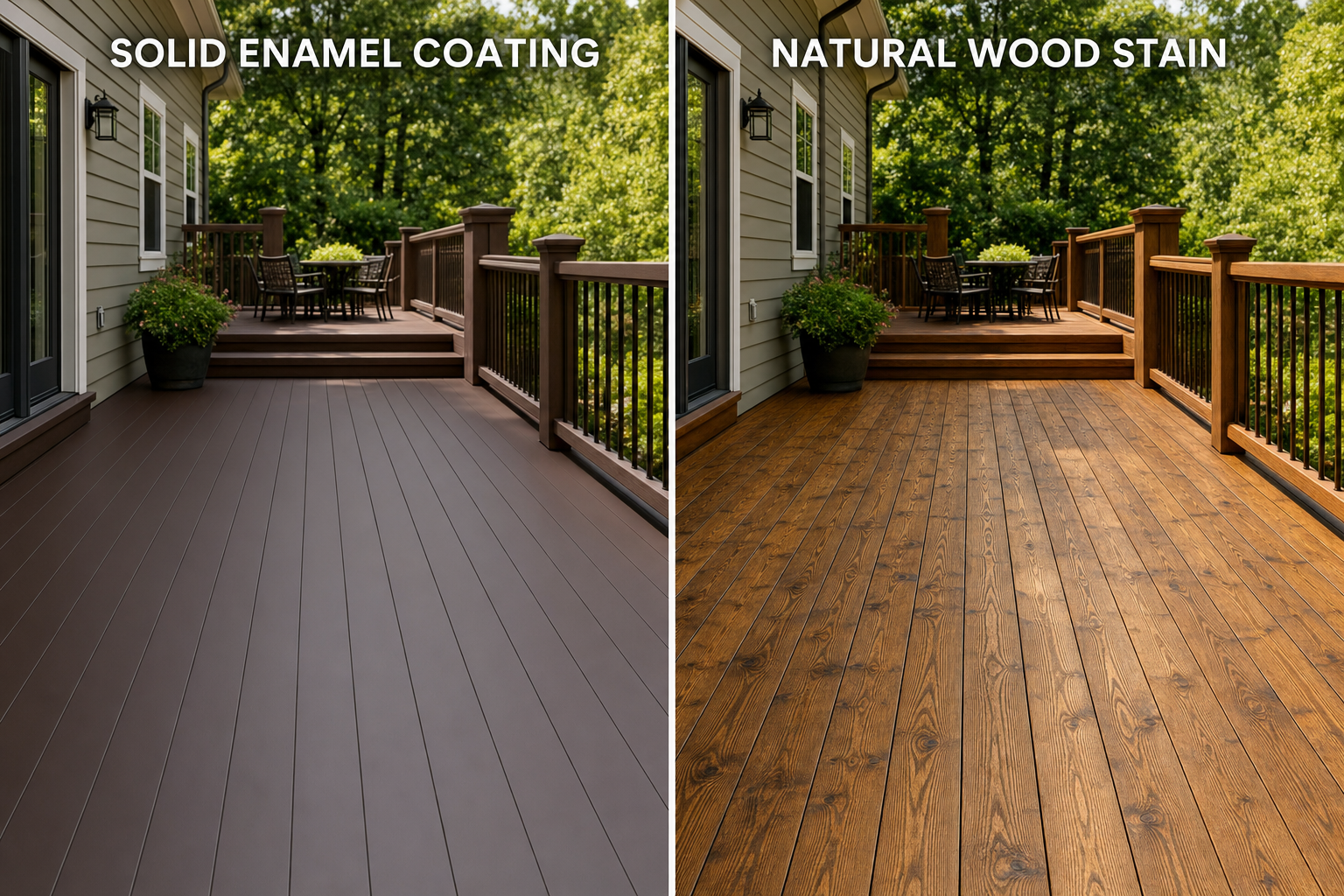
Deck Finishes: Solid Enamel Coating vs. Natural Wood Stain
How you finish a wood deck dramatically affects both its look and how often you'll need to maintain it. Solid coatings hide the wood grain for a clean uniform color; stains let the natural wood character show through.
Solid Enamel Coating
Hides imperfections, old stains, and mismatched boards
Very durable, water-resistant, and UV-protective
Uniform, modern color — great for older or weathered decks
Fully hides the natural wood grain
Chips/peels are more visible if damaged and need matching touch-up
Recoating requires more prep than reapplying stain
Natural Wood Stain
Shows off the natural wood grain and texture
Easier to recoat/refresh over time
Wide range of transparency levels (clear to semi-solid)
Needs more frequent reapplication (every 1–3 years typically)
Won't hide existing wood imperfections or discoloration
Less protective than a solid coating in harsh climates
Our Take
If your deck boards are older or mismatched and you want a clean refresh, a solid enamel coating like Low Lustre is the way to go. If you love the natural wood look and don't mind more frequent upkeep, a quality stain is a great choice.
Still not sure which option is right for you?
Get a free consultation — we'll help you pick the best fit for your budget, climate, and lifestyle.